
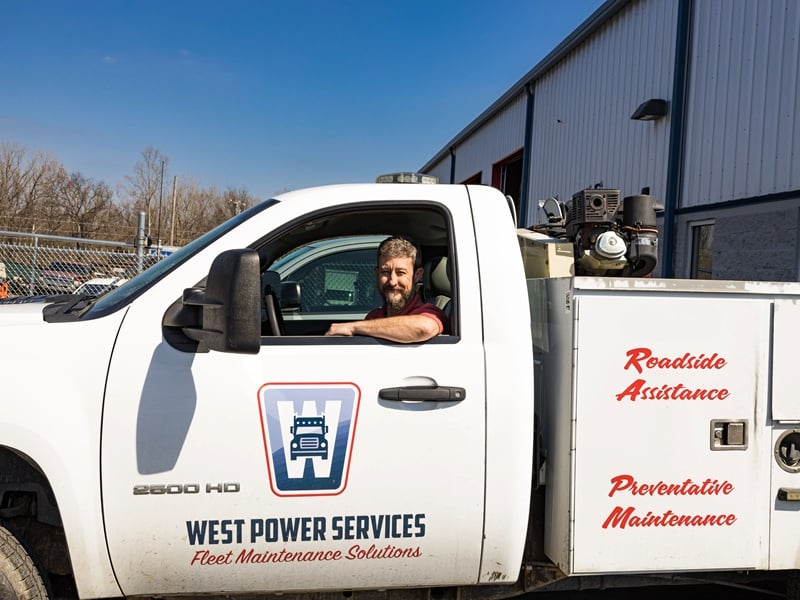
When a commercial truck needs service, bringing the repair shop to the vehicle can save valuable time. Preventive maintenance can be completed at a fleet’s facility. A DOT inspection can be performed without taking a truck out of rotation for a trip to the shop. And a technician can sometimes diagnose or correct a problem before it turns into a larger disruption.
But effective mobile truck repair isn’t simply about doing as much work as possible in a parking lot or on the side of the road.
At West Power Services, mobile service is built around making the right decision for the vehicle, the driver and the customer’s property. That means understanding what can safely and efficiently be completed on-site—and recognizing when a truck belongs in the shop.
For Jason Powell of West Power Services, explaining that difference to customers is an important part of the job.
“If my customers don’t understand what I’m trying to do, then they don’t understand why they need the repair.”
That approach helps define West Power Services’ mobile truck repair program throughout the Nashville area and all of Middle Tennessee.
What Is West Power Services Mobile Service Designed For?
West Power Services primarily uses mobile service for scheduled preventive maintenance, minor repairs, tire service and on-site DOT inspections.
Typical mobile-service needs may include:
- Preventive maintenance services
- DOT inspections
- Minor air leaks
- Lighting repairs
- Tire-related service
- Battery and no-start issues
- Check-engine-light diagnostics
- Certain hoses and minor component repairs
- Initial diagnosis of leaks or other mechanical concerns
Mobile service is generally available Monday through Friday from 7:00 AM to 4:00 PM and can also be scheduled outside of normal business hours with advance notice. It is designed primarily around scheduled fleet maintenance and repair.
West Power Services is not a 24/7 emergency-dispatch provider.
When an unexpected breakdown occurs during normal operations, however, the team can evaluate the situation and determine what assistance may be possible based on technician availability and the nature of the problem.
That evaluation matters because sometimes the most responsible mobile-service decision is not to repair the truck where it sits.
Safety Comes Before Convenience
A fully equipped repair shop provides capabilities that simply cannot be duplicated in a mobile service truck.
Technicians have access to additional lifting equipment, specialized tooling, other technicians who can assist with heavy components or have different expertise, and a more controlled workspace. Major mechanical repairs can also require conditions that aren’t appropriate for a customer’s parking lot—or especially for the side of a highway.
That is why West Power Services does not approach mobile repair with the expectation that every problem should be fixed on-site.
A transmission replacement, major engine repair or significant fluid leak, for example, is typically better handled at the shop.
The decision also protects the technician. Removing heavy components or attempting an extensive repair without the equipment and controlled workspace available in a commercial repair facility can create unnecessary risks.
It protects the customer’s operation as well. Performing major repairs in an active parking or loading area can introduce equipment, fluids, parts, and work activity into areas used by employees, customers and other vehicles.
Sometimes getting the truck to the shop is simply the safer choice.
Environmental Responsibility Is Part of the Decision
Safety isn’t the only consideration.
Fluid containment is another reason West Power Services may recommend moving a vehicle to the shop instead of repairing it at a customer’s location.
A commercial vehicle with a substantial oil, coolant, or other fluid leak can quickly create an environmental problem if it remains parked on pavement while technicians attempt a repair.
At the West Power Services shop, technicians have access to catch pans, cleaning equipment and a controlled environment designed to contain and clean up fluids properly.
Jason says environmental considerations play a significant role in deciding where a repair should occur.
“I’m very mindful of the EPA side. I will tell a customer that I have a spill kit on my truck, but I don’t want to use it.”
The point isn’t that West Power Services mobile technicians aren’t prepared for spills. They are.
The goal is to avoid creating one whenever possible.
As Jason explained, if the repair can be performed more responsibly in the controlled environment of the shop, “that’s what I’m going to recommend.”
For fleet operators, that protects more than the truck. It helps protect the customer’s parking lot, facility, and surrounding environment from unnecessary contamination.
On-Site DOT Inspections Can Keep Fleets Moving
One service particularly well suited to mobile operations is the DOT inspection.
Many inspection components can be evaluated at the customer’s location. Technicians perform extensive visual checks while also physically inspecting components that require closer evaluation.
That can include lifting portions of the vehicle to check for:
- Kingpin wear
- Bearing play
- Tire or wheel movement
- Suspension movement
- Other signs of excessive play or wear
Air-brake testing can also be performed using the truck’s own air system.
For fleet operators with multiple vehicles, conducting inspections on-site can reduce the need to send each truck individually to a repair facility.
More importantly, an inspection may identify developing problems before they create a roadside failure or an out-of-service situation.
Mobile Trailer Maintenance Is a Natural Fit for On-Site Service
Mobile service isn’t limited to the powered units in a commercial fleet. Trailers are often particularly well suited for scheduled on-site maintenance, DOT inspections and repairs.
Unlike a truck with a major engine or drivetrain problem, many trailer maintenance needs can be addressed where the equipment is already parked. That allows fleet operators to have multiple trailers inspected or serviced during the same visit instead of moving each unit back and forth to a repair facility.
West Power Services is already using this approach with commercial fleets. For example, the team provides mobile trailer service for XPO in Goodlettsville, performing work at the customer’s location.
On-site trailer service can include:
- Preventive maintenance
- DOT inspections
- Routine safety inspections
- Identification of brake, tire and suspension wear
- Lighting and electrical repairs
- Minor mechanical repairs
- Other repairs that can be safely completed with mobile equipment
The advantage becomes especially important for fleets with a large number of trailers. A trailer may not accumulate engine hours or mileage in the same way as a powered unit, but its brakes, tires, suspension, axles, decking and structural components still experience significant wear. West Power Services’ trailer-repair program emphasizes catching developing axle, suspension and decking problems before they cause greater downtime, safety concerns or more expensive repairs.
Mobile service creates an opportunity to find many of those issues where the trailers are already staged.
If an inspection identifies a repair that requires heavier equipment or a more controlled work environment, West Power Services can then recommend bringing that trailer to the Nashville or Goodlettsville shop. The existing trailer-repair capabilities include work involving axles, suspension and decking when more substantial repairs are required.
For a fleet with multiple trailers, the result is a practical combination: perform the maintenance, inspections and repairs that make sense on-site, and use the shop when the scope of the work requires it.
That helps reduce unnecessary trailer movement while keeping safety and repair quality at the center of the decision.
The Mobile Truck Is Equipped for the Job Being Dispatched
A West Power Services mobile truck isn’t intended to carry every tool and replacement component found at a repair facility.
Instead, technicians prepare for the specific service call.
The truck may carry an air compressor, jacks and commonly needed tools, while additional equipment is loaded according to the customer’s reported problem.
If a truck has a check-engine light, for example, the technician can bring the diagnostic equipment needed to retrieve and interpret fault codes.
For a battery or no-start problem, the technician may arrive prepared with batteries or related electrical equipment.
Gathering accurate information before dispatch helps West Power Services send the appropriate technician with the appropriate equipment—and can help avoid an unnecessary mobile visit when the symptoms already indicate that the vehicle should go directly to the shop.
Telematics Can Help Diagnose a Problem Before the Technician Arrives
Modern fleet technology is making that initial evaluation increasingly useful.
GPS and telematics systems can sometimes provide diagnostic trouble codes and other information about what is happening with the vehicle. Some systems also integrate cameras and additional vehicle data.
If a fleet can provide those fault codes before West Power Services dispatches a technician, the service team may be able to make a better initial assessment.
A warning light, for example, doesn’t always tell a driver how serious the underlying problem is.
Remote diagnostic information can help answer a much more important question:
Can this truck safely be driven to the shop, or should it remain parked and be towed?
That distinction can prevent additional vehicle damage while avoiding an unnecessary mobile dispatch.
Sometimes Towing Is the Best Mobile-Service Decision
One of the biggest misconceptions about mobile truck repair is that once a technician arrives, the goal is always to complete the repair at that location.
In reality, diagnosing the problem may establish that towing is the safest and most economical next step.
According to Jason, a significant percentage of calls that begin as mobile-service requests ultimately require the vehicle to be transported to the shop.
That isn’t a failure of mobile service. In many situations, determining the safest next step is the service.
A technician may determine that a truck should not be driven because of a mechanical failure, substantial fluid leak, overheating condition, or another issue that could worsen if the vehicle remains in operation.
West Power Services can then give the customer the option to arrange towing independently or have West Power coordinate the tow.
The objective is to solve the customer’s problem rather than simply complete a mobile repair.
Jason describes that philosophy simply: when a customer is in a bind, West Power Services tries to treat the situation as though “their bind is our bind.”
Mobile Preventive Maintenance Creates a Different Kind of Value
Mobile service becomes especially valuable when it is planned rather than reactive.
Instead of waiting for a truck to break down, fleet operators can schedule preventive maintenance at their own location and service multiple vehicles together.
West Power Services currently uses this approach with commercial fleet customers, servicing several vehicles during a single scheduled visit.
That can reduce trips to the shop while helping the fleet stay current on mileage- and time-based maintenance intervals.
Consistent service also creates better maintenance records. Those records can help fleet managers:
- Track completed maintenance
- Identify recurring vehicle problems
- Prepare for upcoming service intervals
- Support warranty documentation
- Maintain more complete vehicle service histories
For fleets managing numerous commercial vehicles, mobile preventive maintenance can therefore become part of a broader fleet-maintenance strategy rather than simply a response to breakdowns.
Knowing What Not to Repair On-Site Is Part of Good Mobile Service
There is a simple idea behind West Power Services’ approach to mobile truck repair:
Convenience should never come at the expense of safety, repair quality or environmental responsibility.
Some repairs make excellent candidates for mobile service. Others belong in a properly equipped commercial truck repair facility.
The West Power Services team evaluates the vehicle, the repair, the work environment, and the equipment required before recommending the next step.
That could mean completing scheduled preventive maintenance at your facility.
It could mean performing a DOT inspection across several fleet vehicles.
It could mean sending a technician to diagnose a warning light.
And it could mean recommending a tow to the shop rather than attempting a major repair in a parking lot or alongside a highway.
The objective is the same in each case: make the decision that safely gets the vehicle repaired and back to work while protecting the customer, the technician and the environment.
Need Mobile Truck Service in Nashville or Middle Tennessee?
West Power Services provides scheduled mobile truck repair, on-site preventive maintenance and fleet service throughout the Nashville and Middle Tennessee area.
Mobile service is generally available Monday through Friday, 7:00 AM to 4:00 PM. West Power Services is not a 24/7 emergency-dispatch provider.
For fleets managing multiple commercial vehicles, West Power Services can also coordinate preventive maintenance, inspections, repairs and service records as part of a broader fleet-maintenance program.
Request Mobile Service
Contact West Power Services to discuss your vehicle or fleet and determine whether mobile service or shop service is the best option.
